


















Wissen
Multi-Country Event Synchronization: Leveraging Localized Production and Global Logistics to Optimize the Total Cost of Ownership (TCO) for Bulk Beach Flag Procurement
Nov
I. Introduction: The Global Brand Dilemma
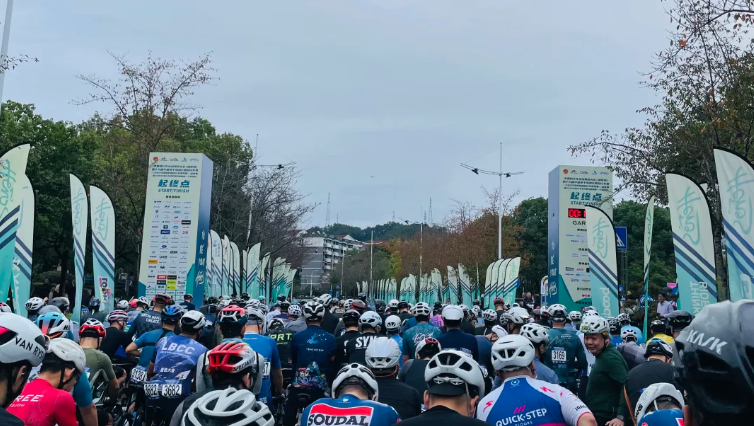
For multinational corporations (MNCs), the visual consistency of their brand is a non-negotiable asset. When launching coordinated marketing campaigns—from product launches in Berlin to sponsorship activations in Tokyo—the execution relies heavily on mobile, high-impact display solutions like beach flags, canopy tents, and pop-up banners.
The procurement manager or brand director orchestrating these global efforts faces a constant, agonizing trade-off: speed and cost versus brand compliance and quality consistency.
Often, global teams fall into one of two inefficient sourcing models:
- Centralized Sourcing: Mass production at one location (usually low-cost), followed by shipping large volumes worldwide. This ensures quality consistency but results in prohibitively high freight costs, long lead times, customs delays, and massive logistics risk.
- Decentralized Sourcing: Procuring locally in every country. This is fast but inevitably leads to quality inconsistency, fragmented spending, loss of bulk pricing power, and catastrophic color mismatches that dilute brand equity.
The solution to this global dilemma is not found in either extreme, but in a sophisticated, hybrid approach centered on one critical metric: the Total Cost of Ownership (TCO). TCO, unlike the simple unit price, provides a holistic view, accounting for every dollar spent from design finalization to asset disposal.
Our Thesis: The optimal strategy for bulk beach flag procurement is the Hybrid Sourcing Model, which combines centralized quality control with strategically distributed localized production hubs. This approach is engineered to drastically reduce TCO by minimizing logistics costs and speed-to-market risk, while simultaneously guaranteeing global brand consistency.
II. Deciphering the Total Cost of Ownership (TCO) in Global Procurement
In the context of temporary display assets like beach flags, the perceived savings from a low unit price often prove to be a costly illusion. For professional procurement teams, understanding the full scope of TCO is paramount to making a financially sound decision.
The Flaw of Focusing on Unit Price (The “Tip of the Iceberg”)
A beach flag printed for $30 in a central location might look attractive on paper, but this unit price is merely the tip of the iceberg. Display products are bulky, low-density items, meaning their shipping cost is determined by dimensional weight (DIM), not actual weight. Freight costs, duties, and handling charges can easily multiply the purchase price by two or three times.
The Anatomy of Hidden Costs
The true TCO for global beach flag procurement is driven by four major hidden cost categories:
- Inbound Logistics and Freight: This includes the cost of moving the goods, often involving rapid, expensive Air Freight to meet tight event deadlines, or long-haul, risky Ocean Freight. It also encompasses expensive Last-Mile Delivery fees, especially for bulky items delivered to remote event sites.
- Customs, Duties, and Brokerage: Every border crossing incurs fees (tariffs, VAT, import duties). Delays in customs clearance due to improper documentation—a common challenge with mass, cross-border shipments—can result in penalties, demurrage fees, and, most critically, event date failure, which is an incalculable brand cost.
- Warehousing and Inventory: Maintaining a massive central inventory requires significant capital and physical storage space. Costs include storage fees, inventory taxes, insurance, and the administrative burden of tracking stock levels across regions.
- Quality Failure and Obsolescence Risk: This is the cost of replacement. If a flag arrives with poor color matching, non-compliant safety certification (e.g., poor fire rating), or simply tears due to low Denier fabric, the replacement cost includes the rush re-print, expedited shipping, and the reputational damage from the poorly presented brand.
The Strategic TCO Calculation
For professional procurement, TCO can be approximated by the formula:$$\text{TCO} = \text{Purchase Price} + \text{Logistics Costs} + \text{Inventory Costs} + \text{Quality/Risk Costs}$$
Key Takeaway: For bulky display items, the goal is not to negotiate a 10% lower purchase price, but to implement a logistical strategy that reduces the Logistics and Quality Failure Costs by 40%—which often yields exponentially greater savings.
III. Strategy 1: Centralized Quality Control and Standardization
The foundation of the Hybrid Sourcing Model is the absolute centralization of quality standards, allowing for printing decentralization without brand dilution. Consistency is achieved by separating the “Hardware” (the structural poles and bases) from the “Soft Goods” (the printed fabric).
Establishing “Global Gold Standards”
All consistency begins at the design and material specification level:
- Centralized Pre-Press and Color Matching: The brand’s Head of Creative must define all artwork files and color profiles centrally. This includes mandatory adherence to specific Pantone Matching System (PMS) codes, and strict Delta E tolerances (the measure of color difference) for all printers in the supply chain. We mandate that the fabric’s UV stability and Denier rating (a measure of fabric strength) meet a single, high standard regardless of the final print location.
- The Power of Interchangeable Templates: The structural hardware must be entirely standardized. Our Beach Flag poles and bases are engineered to be universally interchangeable. This ensures that a flag printed in Mexico will snap perfectly onto a pole base sourced in Germany, simplifying field operations and reducing inventory complexity.
Vendor Qualification through Global Quality Assurance (GQA)
Strong Display operates as the Master Supplier and Quality Auditor. We control the supply of the structural hardware (which is heavily quality-checked and often consolidated) and rigorously audit our local printing partners through a stringent Global Quality Assurance (GQA) framework.
This GQA mandate requires local hubs to prove:
- Calibration: Daily or weekly proofing against master color swatches using spectrophotometers.
- Safety Compliance: Mandatory adherence to local safety standards, especially Fire Retardancy Certification (e.g., NFPA 701 in North America, B1 in the EU), which must be provided with every shipment.
- Finishing Consistency: Standardized sewing, hemming, and reinforcement points to ensure structural longevity.
By centralizing the specification and audit (Strategy 1), we maintain brand integrity while preparing for the cost savings of decentralization.
IV. Strategy 2: The Hybrid Sourcing Model – Localized Production Hubs
The Hybrid Sourcing Model is where the maximum TCO savings are realized. It acknowledges that the most expensive and time-consuming part of the supply chain is the international shipping and customs clearance of a single, finished product.
The Principle of Geo-Clustering (Near-Shoring)
The core idea is Geo-Clustering: strategically positioning pre-qualified production hubs near high-demand regions to serve multiple nearby countries quickly and affordably.
- EU Hub Advantage: A production hub located in a central EU country (e.g., Poland or Germany) can serve the entire Schengen area rapidly and duty-free. This eliminates lengthy customs procedures and expensive intra-European Union freight, providing an ideal platform for high-frequency, short-notice European events.
- APAC Hub Advantage: The Asia-Pacific region is highly fragmented with complex trade barriers and logistics. A hub in a manufacturing center like Vietnam or India allows for faster delivery to neighboring countries like Australia, Singapore, or Thailand, bypassing complex Chinese customs/logistics and drastically cutting down on ocean transit times.
Optimization Through De-Consolidation and JIT Printing
Localized production allows us to implement two powerful cost-reduction techniques:
- Focus on Last-Mile Cost Reduction: The single greatest logistics multiplier in TCO is often the “Last 1000 Miles”—the segment from a major port to the final event location. By printing locally, we eliminate the need for long-haul international freight for the bulky, printed fabric component. The hardware components (poles/bases) can be shipped efficiently via ocean freight to the local hub in advance, while the high-value, customizable fabric is printed and assembled locally just days before the required delivery date.
- Just-In-Time (JIT) Printing: Local hubs enable true JIT manufacturing. Instead of ordering 5,000 flags centrally and warehousing them for a year, the client can place smaller, regional orders that are printed immediately upon activation. This radically reduces Inventory Costs, minimizes the risk of Obsolescence (due to a brand refresh or design change), and lowers the capital tied up in slow-moving stock.
The result is a simultaneous reduction in both Logistics Costs (faster, shorter freight) and Inventory Costs (less stock held for less time).
V. Strategy 3: Advanced Global Logistics and Fulfillment
Even with localized production, the movement of goods and components must be managed with extreme financial rigor. This involves smart shipping choices and deep trade compliance knowledge.
Component vs. Finished Product Shipping
A strategic logistics plan differentiates between materials based on their weight, value, and stability:
- Ocean Freight for Hardware: The heaviest parts—steel bases, rigid poles—are the most stable in terms of design and are cost-effective to ship via slow Ocean Freight to the localized hub, where they can be held as strategic component inventory.
- Air Freight for Fabric (Only When Necessary): The printed fabric (the “soft goods”) is lightweight and time-sensitive. By printing it close to the final destination (Strategy 2), we minimize the distance it must travel via expensive Air Freight. If rapid international movement is required, the fabric alone costs a fraction to expedite compared to the entire kit.
Leveraging Global Trade Compliance Expertise
A strong strategic partner must be an expert in global trade to mitigate financial and time risk:
- Strategic Incoterms Selection: The choice of Incoterms (International Commercial Terms) dictates where the risk and cost of transport shift from the seller to the buyer. For global bulk procurement, we often recommend strategic use of Delivered at Place (DAP) or Delivered Duty Paid (DDP). Using DDP, where the supplier manages customs, duties, and taxes to the final destination, provides the buyer with cost certainty and minimizes the risk of costly in-transit customs delays.
- Utilizing Free Trade Agreements (FTAs): Procurement should utilize FTAs (e.g., USMCA, CPTPP) to minimize tariffs when sourcing materials or components internationally. A partner like Strong Display, with a sophisticated global supply chain, can optimize the Country of Origin designation to ensure the lowest applicable duty rates, directly lowering the TCO.
- Brokerage Efficiency: We utilize a single, pre-vetted global customs broker or network of brokers. This standardizes documentation, minimizes processing errors, and ensures seamless, predictable border crossings, preventing costly administrative delays.
VI. Conclusion: Synchronized Success and Long-Term Partnership
Managing bulk beach flag procurement across multiple countries is a complex logistics and financial challenge. The naive pursuit of the lowest unit price is a guaranteed path to higher TCO, brand inconsistency, and costly event failure.
The true optimization lies in a comprehensive, holistic, and hybrid strategy: Centralized Quality Control guarantees brand integrity, Localized Production minimizes volatile logistics costs and inventory risk, and Intelligent Logistics ensures on-time, compliant delivery.
Strong Display is engineered to be more than a vendor; we are a strategic supply chain partner capable of managing the geopolitical, logistical, and quality complexities of global deployment. We free your procurement and marketing teams to focus on brand activation, knowing that visual perfection and cost efficiency are simultaneously being achieved.
Call to Action: Is your current sourcing model increasing your TCO? Contact Strong Display today for a personalized Global Sourcing Audit to map your current costs against our optimized Hybrid Model and quantify your potential TCO savings.