
















Conocimiento
Self-Healing Coatings and Anti-Stain Treatments: How to Extend the Lifespan of High-Frequency Table Covers and Pop Up Walls
Nov
I. Introduction: The High-Frequency Asset Management Challenge
For businesses that rely on a constant presence—be it through retail demonstrations, recurring trade shows, or large-scale rental operations—display assets like Cubiertas de mesa and Pop Up Walls are not mere accessories; they are vital, high-frequency workhorses. They are the frontline representation of a brand, yet they face continuous abuse: coffee spills, scuff marks, accidental rips, and the relentless wear of setup and teardown cycles.
In a high-frequency usage environment, the Total Cost of Ownership (TCO) is dominated not by the initial purchase price, but by replacement frequency and maintenance labor. A marketing asset that fails prematurely due to staining or physical damage represents a direct loss of investment and, critically, risks presenting a tarnished brand image.
This article provides a deep dive into two cutting-edge material science innovations—Self-Healing Coatings and Advanced Anti-Stain Treatments—and explains how they fundamentally alter the longevity and TCO of your most used display inventory. We will move beyond simple cleaning tips to explore the chemical and physical solutions that keep your assets looking flawless, event after event, year after year.
II. Understanding Asset Failure in High-Frequency Environments
To effectively manage asset lifespan, we must first diagnose the primary modes of failure for soft and semi-rigid display materials.
A. Failure Mode 1: Cosmetic Degradation (The Stain Problem)
This is the most common and fastest path to obsolescence. Stains from food, ink, grease, and dirt make the fabric or graphic appear unprofessional, forcing premature replacement even if the material is structurally sound.
- Table Covers: Highly susceptible to liquid spills (wine, coffee, oil), ink migration from promotional materials, and adhesive residue.
- Pop Up Walls (Fabric Graphics): Vulnerable to dirt transfer from hands during handling, scuff marks near the base, and water damage during transport or outdoor use.
B. Failure Mode 2: Mechanical Degradation (The Tear and Scuff Problem)
Mechanical damage usually occurs during the logistics phase (packing/unpacking) or during rapid setup/teardown.
- Table Covers: Abrasion damage from being dragged across tables or floors, and small snags from sharp edges or pins.
- Pop Up Walls (Rigid Panels/Laminates): Micro-scratching and scuffing of the laminate or vinyl graphics. These tiny scratches accumulate, eventually diffusing light and making the graphic appear dull, scuffed, or “worn out,” even if the internal structure is fine.
The goal of advanced treatments is to create a defensive barrier that actively mitigates these two failure modes, extending the functional and visual life of the asset.
III. Deep Dive: Advanced Anti-Stain and Repellent Treatments
Advanced anti-stain treatments work at a molecular level to prevent foreign substances from bonding with the display material fibers.
A. The Chemistry of Repellency: Fluoropolymers vs. Nanotechnology
Traditional stain guards often rely on topical coatings that wash off or degrade quickly. Modern professional-grade treatments, designed for commercial durability, use more sophisticated chemistry:
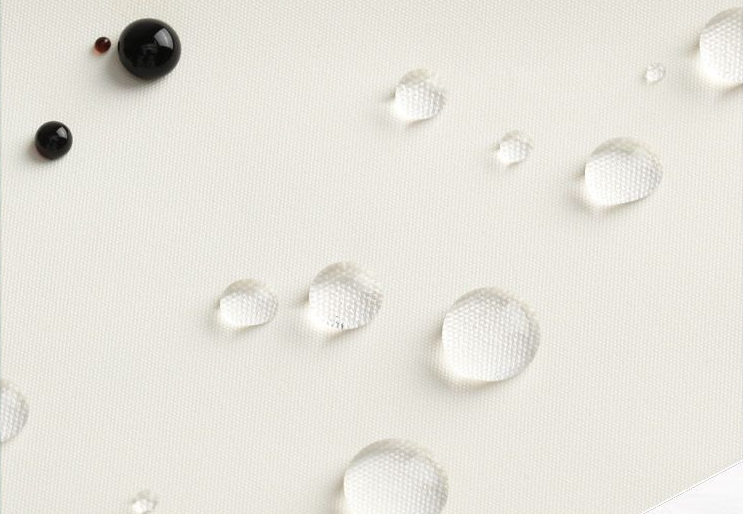
- Fluoropolymers (PFAS-free alternatives): These form a low surface-energy barrier that forces liquids (even oil-based ones) to bead up and roll off the fabric before they can penetrate the fibers. This makes cleaning incredibly easy (often requiring just a damp cloth) and significantly extends the time before aggressive washing is required.
- Nanotechnology Coatings: These treatments create a microscopic, highly textured surface on the fabric. The rough, nanoscale topography prevents particles and liquids from achieving sufficient contact area to stick. This treatment is often integrated into the material during the finishing process, offering superior durability against wear.
B. Practical Application and Impact on TCO
When evaluating a supplier’s anti-stain offering, the key is to ask about hydrophobic (water-repelling) and oleophobic (oil-repelling) properties.
- TCO Reduction: By resisting common stains, the cleaning cycle is extended. Less frequent, less aggressive washing preserves the print quality and extends the fabric’s structural life, directly reducing replacement costs.
- Print Quality Preservation: These coatings often include UV inhibitors that further protect the dye-sublimated graphics from fading, ensuring color consistency across multiple years and deployments.
IV. The Innovation Frontier: Self-Healing Coatings (SHC)
Self-Healing Coatings (SHC) represent the pinnacle of material innovation for protecting semi-rigid display graphics (like the PVC or laminated panels used on some Pop Up Walls or rigid signage). These polymer-based coatings possess an extraordinary ability to repair superficial damage automatically.
A. The Mechanics of Repair: The Reversible Polymer Bond
Self-healing coatings work by incorporating reversible polymer bonds (often polyurethane or silicone-based). When the surface is scratched:
- The Damage: The energy from the sharp object (e.g., a fingernail, a case corner) temporarily breaks the polymer cross-links.
- The Healing: The coating isn’t “refilling” a missing piece, but rather allowing the broken polymer chains to spontaneously re-cross-link or “flow” back together, effectively erasing the scratch.
B. Types of Self-Healing Mechanisms
- Intrinsic Self-Healing (Room Temperature): This is the most desirable type for display assets. The polymer bonds are weak enough to automatically repair minor scratches and scuffs within minutes or hours simply through ambient heat and time. This is ideal for high-contact areas like the lower panels of a Pop Up Wall.
- Extrinsic Self-Healing (Triggered): Some coatings require an external stimulus—such as moderate heat (e.g., using a heat gun or hot water) or UV light—to trigger the repair process. While slightly less convenient, this provides powerful repair for deeper damage.
C. SHC Impact on Pop Up Wall Investment
For a brand investing in a high-quality, reusable Pop Up Wall system (which represents a significant capital outlay), SHC changes the investment calculation:
- Eliminating Scuff-Based Obsolescence: SHC directly combats the “micro-scratch accumulation” failure mode (Section II, B). The panels maintain their original gloss and clarity, extending their usable visual life by two to three times compared to standard laminates.
- Reduced Refurbishment Costs: Instead of replacing individual scratched graphic panels every two years, the lifespan aligns more closely with the structural hardware (e.g., 5-7 years).
V. Strategic Implementation: Best Practices for Procurement and Maintenance
Implementing these advanced technologies requires a shift from reactive replacement to proactive asset preservation.
A. Procurement Checklist for Advanced Materials
| Característica | Table Cover (Soft Goods) | Pop Up Wall (Semi-Rigid) |
| Repellency | Look for Oleophobic (Oil) and Hydrophobic (Water) ratings. | Focus on surface tension/scratch resistance of laminate. |
| Durabilidad | Ask for the number of wash cycles the treatment survives (must be commercial-grade). | Verify the coating’s hardness rating and healing temperature. |
| Color Fidelity | Ensure the treatment is transparent and does not alter the color or UV stability of the print (no yellowing). | Confirm the coating does not interfere with the graphic’s light reflection or texture. |
B. Extending the Lifespan: Maintenance Protocols
Even with advanced coatings, proper field management is essential:
- Non-Abrasive Cleaning Protocol: Always use soft cloths (microfiber) and neutral pH cleaners. Harsh chemicals can break down even the best fluoropolymer bonds.
- Strategic Packing: Never fold table covers immediately after washing; ensure they are fully dry. For Pop Up Walls, utilize compartmented carrying cases designed to keep panels from rubbing against each other, minimizing the need for the self-healing feature.
- Heat for SHC: For coatings requiring heat activation, train field staff to safely apply controlled heat (a low-setting heat gun or even a few minutes in warm sunlight) to panels exhibiting excessive scuffing before the next event.
VI. Calculating the Return on Investment (ROI)
The upfront cost of a display asset treated with SHC or premium anti-stain technology is typically 15% to 30% higher than an untreated, standard asset. However, this premium generates a significant ROI through TCO reduction.
A. The Multiplier Effect
Assume a high-frequency asset without treatment has a functional visual lifespan of 2 years before replacement is mandatory due to cosmetic wear.
| Scenario | Cost Premium | Expected Lifespan | Replacement Cycles (5 yrs) | Unit TCO Multiplier |
| Standard Untreated | 0% | 2 years | 2.5 times | 1.00x |
| Advanced SHC/Anti-Stain | +25% | 4 years | 1.25 times | 0.625x |
Calculation: Replacing an asset 1.25 times over 5 years is significantly cheaper than replacing it 2.5 times, even with a 25% initial premium. The total 5-year replacement cost is reduced by approximately 37.5%, not including the administrative savings and the intangible benefit of consistently pristine branding.
B. The Intangible Benefit: Brand Consistency
The ability to maintain consistent, high-quality visual representation across a decentralized network of events is priceless. Premium coatings ensure that your five-year-old Pop Up Wall looks identical in color, clarity, and cleanliness to your newest asset, protecting brand integrity and conveying reliability to your customers.
VII. Conclusion: A Shift from Procurement to Investment
In the high-stakes world of frequent event marketing, the choice between standard and advanced material finishes is a strategic investment decision. The marginal upfront cost of self-healing coatings and advanced anti-stain treatments is an investment in durability that pays dividends through a drastically reduced Total Cost of Ownership and, most importantly, uncompromising brand presentation.
As a strategic supplier, Strong Display integrates these technologies not as add-ons, but as core components of our high-frequency display solutions, ensuring your Table Covers and Pop Up Walls remain visually impeccable long after the initial investment.